AI-Driven Marketing: How to Use Data to Outperform Your Competition
March 20, 2026·8 min read
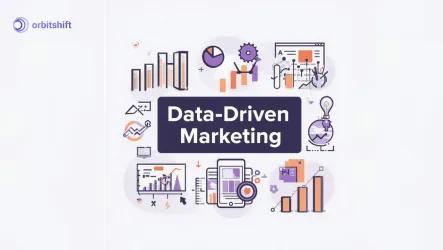
Marketing has always been about reaching the right person with the right message. The difference now? AI makes it possible to do that at a scale and speed that was unthinkable just a few years ago.
For enterprise marketing and growth leaders, that shift is significant. Campaigns that once relied on broad targeting and educated guesswork can now be powered by real-time data, predictive analytics, and machine learning - transforming how you engage accounts, allocate spend, and measure ROI.
But here's the reality: most marketing teams are still underutilizing AI. According to Christina Inge, a marketing analytics expert and instructor at Harvard's Division of Continuing Education, "the vast majority of marketers are underutilizing AI." That gap represents a significant competitive opportunity - if you know how to close it.
This guide breaks down what AI-powered, data-driven marketing actually means in practice, why it matters for enterprise teams, and how to build a strategy that generates measurable results.
What Is AI-Powered, Data-Driven Marketing?
At its core, data-driven marketing is the practice of using customer data and behavioral insights to inform every marketing decision - from audience segmentation to channel selection to messaging. Rather than relying on assumptions or demographic generalizations, you're working with hard evidence.
AI takes that a step further. By applying machine learning, natural language processing (NLP), and predictive analytics to your data, AI can surface patterns and insights that humans simply cannot process at scale. The result? Marketing that is faster, more precise, and more personalized.
The numbers back this up. Companies that adopt data-driven marketing are six times more likely to be profitable year-over-year. Businesses using data-driven personalization deliver five to eight times the ROI on marketing spend. And AI adoption across the global business landscape has already reached 72%, according to McKinsey.
The question is no longer whether AI belongs in your marketing strategy. It's how to deploy it effectively.
Why This Matters forEnterprise Marketing Leaders
Enterprise marketing is complex. Sales cycles are long, buying committees involve multiple stakeholders, and the cost of poorly targeted campaigns is high - both in spend and opportunity cost.
AI-driven marketing addresses these challenges directly. Here's how:
Precision Targeting at AccountLevel
Traditional audience segmentation relies on broad demographic data. AI-powered segmentation goes deeper, analyzing firmographics, technographics, behavioral data, and real-time engagement signals to identify which accounts are most likely to convert - and when.
For account-based marketing (ABM) strategies, this precision is invaluable. Instead of casting a wide net, you focus resources on high-value accounts, engaging the right stakeholders with tailored messages at every stage of the buying journey.
Hyper-Personalization Acrossthe Buying Committee
Enterprise deals rarely involve a single decision-maker. With 6 to 15 stakeholders involved in a typical enterprise purchase, personalization at scale is a genuine challenge - one that AI is uniquely positioned to solve.
AI analyzes individual behavior, role-specific content consumption, and engagement history to deliver personalized experiences across every touchpoint. Think of how Netflix collects viewing history to recommend content tailored to each user. The same logic applies to B2B marketing: by understanding each stakeholder's priorities, you can craft messaging that resonates at an individual level, not just an account level.
Sephora offers another compelling example, using AI-powered chatbots to deliver personalized beauty recommendations based on individual customer profiles. For enterprise marketers, this translates to dynamic email content, customized landing pages, and role-specific outreach that speaks directly to each buyer's concerns.
Predictive Analytics forSmarter Pipeline Management
One of the most powerful applications of AI in marketing is predictive account scoring - assigning scores to accounts based on their likelihood to convert, using machine learning to continuously refine those predictions.
Rather than relying on gut instinct to prioritize your pipeline, predictive analytics gives you a data-backed framework. Machine learning models analyze engagement signals, firmographics, and intent data to identify which accounts deserve immediate attention.
The result is a higher-quality pipeline, shorter sales cycles, and more efficient use of your marketing budget.
Key Applications of AI in Enterprise Marketing
Advanced Data Analytics
AI processes both structured and unstructured data - from purchase histories and website interactions to social media posts and video content. This gives marketing teams a comprehensive view of consumer behavior, brand perception, and emerging market trends that would be impossible to compile manually.
For enterprise teams, this means richer account intelligence, more accurate audience segmentation, and the ability to respond to market shifts in real time.
AI-Powered Content Generation
Generative AI tools like ChatGPT, Jasper, and Google’s Gemini empower marketing teams to scale high-quality content - from blogs and email campaigns to social posts and ad copy. Orbitshift goes a step further, enabling sales and marketers to instantly craft personalized outreach - tailored emails, LinkedIn messages, pre-meeting briefs, and even account-specific sales decks in seconds.
This capability is particularly valuable for enterprise ABM programs, where creating account-specific content across multiple channels is resource-intensive. AI significantly reduces that burden while maintaining a high degree of personalization.
Programmatic Advertising andReal-Time Optimization
AI enhances programmatic advertising by using customer history, preferences, and contextual signals to deliver ads with higher relevance and conversion rates. More importantly, AI-powered platforms analyze campaign performance in near real-time, allowing teams to reallocate spend, adjust messaging, and optimize placements on the fly.
According to IBM, AI marketing tools can identify the right channels for a media buy and even the optimal placement of an ad based on customer behavior - giving marketers a level of campaign intelligence that directly improves ROI.
Sentiment Analysis andCustomer Intelligence
Understanding how your target accounts perceive your brand is critical for enterprise marketers. Sentiment analysis tools use AI to evaluate customer opinions expressed through social media, reviews, and customer feedback - providing real-time insight into brand health and reputation.
This intelligence enables marketing teams to adjust messaging proactively, address concerns before they escalate, and identify advocates within their target accounts.
Marketing Automation andWorkflow Efficiency
Routine tasks - data entry, content scheduling, email sequencing, CRM updates - consume significant time that could be directed toward strategic initiatives. AI-powered automation streamlines these workflows, freeing your team to focus on high-impact activities like campaign strategy, creative development, and stakeholder engagement.
As Inge notes, AI is "a real efficiency driver" that allows teams to sketch, iterate, and validate ideas far faster than traditional processes allow.
Building Your AI-Driven Marketing Strategy: A Practical Framework
Adopting AI in marketing is not a single decision - it's a structured process. Here is a framework for enterprise teams looking to build a robust, data-driven marketing operation:
1. Define clear objectives. Start with specific, measurable goals. Are you trying to shorten the sales cycle? Improve pipeline quality? Increase engagement with a specific account segment? Clear objectives determine which AI tools you need and how you'll measure success.
2. Audit your datainfrastructure.AI is only as effective as the data it runs on. Assess the quality, completeness, and integration of your existing data sources - CRM systems, website analytics, intent data, and customer interactions. Address gaps before investing in AI tools.
3. Select the right tools for your use case.The AI marketing landscape is vast. Platforms like Orbitshift offers an agentic AI solution that combines intent data, contextual outreach, andRFP automationlovable is a vibe coding platform that helps marketers build campaign assets in a click; tools like Jasper support content generation. Match tools to your specific objectives.
4. Ensure data privacy compliance.Enterprise marketing involves handling significant volumes of customer data. Compliance with regulations like GDPR and CCPA is non-negotiable. Build transparent data practices into your AI strategy from the start.
5. Invest in team upskilling. As Inge emphasizes, "your job will not be taken by AI. It will be taken by a person who knows how to use AI." Equip your marketing team with the skills to use AI tools effectively, interpret outputs critically, and maintain human oversight over automated processes.
6. Monitor, measure, and optimize continuously.Set KPIs before deployment and track them rigorously. AI tools improve with feedback and fresh data - ongoing monitoring ensures your investment delivers increasing returns over time.
Navigating the Challenges
AI-driven marketing delivers substantial benefits, but enterprise leaders should approach adoption with clear-eyed awareness of the challenges involved.
Data quality and integrationremain significant obstacles. Siloed data across departments, incomplete customer records, and inconsistent data governance can undermine AI-generated insights. Prioritize data integration and implement robust data governance practices before scaling AI initiatives.
Algorithmic biasis a genuine risk. AI models trained on historically biased datasets can perpetuate unfair targeting or representation. Regular audits of AI systems and a commitment to representative training data are essential safeguards.
Transparency and ethical use are increasingly under scrutiny. Customers and regulators expect clarity on how their data is used. Building transparent AI practices - disclosing AI involvement in content creation, providing channels for customer feedback, and adhering to data protection standards - builds trust and protects brand reputation.
Organizational readinessis often the biggest barrier. The 2024 State of AI in Marketing report identifies a significant gap between individual enthusiasm for AI and organizational preparedness to implement it. Bridging that gap requires investment in training, policy development, and a clear implementation roadmap.
The Competitive Edge You Can't Afford to Ignore
The marketing teams that will outperform their competitors over the next decade are those building AI-driven capabilities now. The advantage is compounding: better data leads to more precise targeting, which drives higher engagement, which generates richer data, which enables even sharper personalization.
For enterprise marketing and growth leaders, the opportunity is clear. AI-driven, data-driven marketing reduces inefficiency, accelerates pipeline, and delivers the kind of personalized, high-touch engagement that enterprise buying committees respond to.
The tools are available. The data is there. The question is whether your team is positioned to use them effectively.
Start by auditing where your current marketing strategy relies on assumptions rather than data - those are the gaps where AI can deliver immediate impact.